Living After Loss
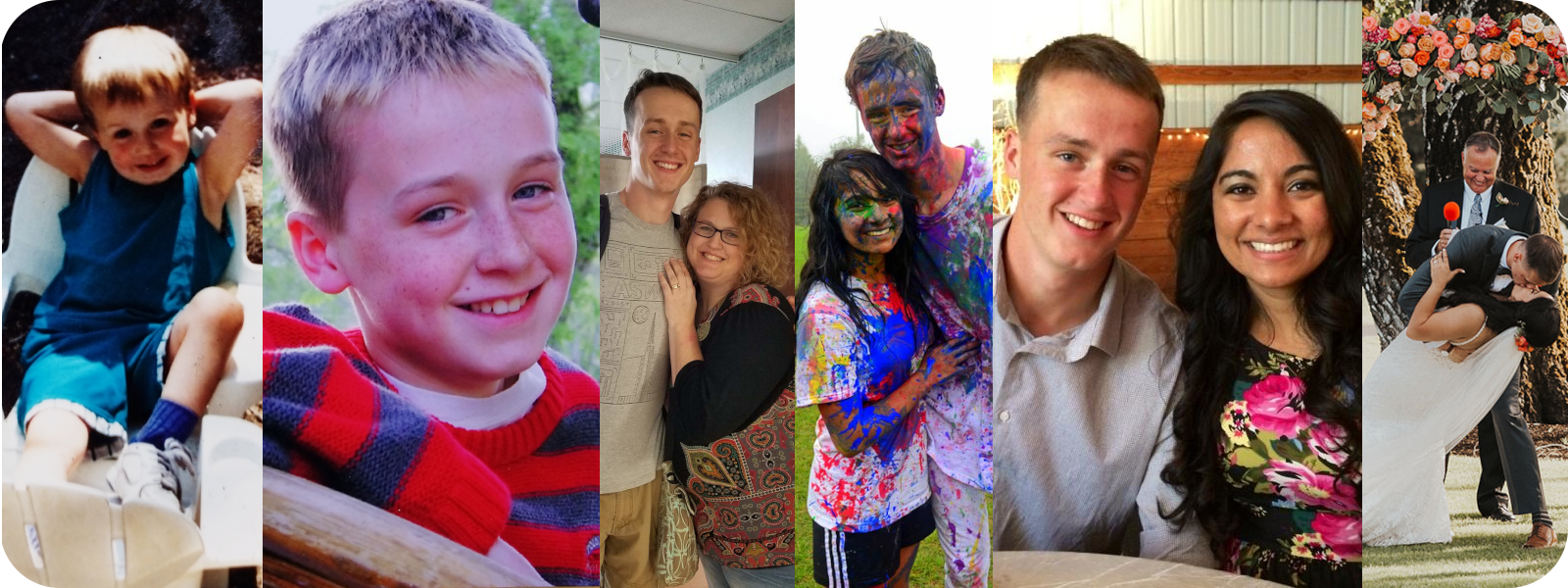
Our Son
Our son was just a week shy of his twenty‑fifth birthday when he died. He was married to his high school sweetheart, a young husband with a life ahead of him that seemed to be opening rather than closing. He had served as a Marine and had been deployed to Afghanistan the year before he married. He was full of life and laughter, and motivated everyone around him to feel they could become something greater. We moved to Oregon to be near him and his wife because we expected to grow old around their growing family. That is the son I am thinking of as I write what follows.
The Anniversary
Each year around this time, messages begin arriving from people who love us—short notes, texts, and calls to say they are thinking of us. Words from generous hearts, often reminding us of the hope for the resurrection. The people who send these messages mean well; they remember our son, and they do not want us to feel alone. I am genuinely thankful for that love.
But this day, and what it represents, is not simple for us. Earlier today I asked my wife, Heidi, what April 15 means to her—whether she marks it in some particular way, how she carries it. She told me it is very personal to her, a day to remember and mourn her son, but not a day she wants to share with others, because she feels they cannot understand. I respect that. For her, the weight of this day is something she carries quietly, deep in her own heart.
For me, I respond to days like this a bit differently. I do not like to mark the day my loved ones died. Not my father. Not my mother. Not my son. Their deaths are never far from my mind. I do not need a date on the calendar to remember. The day they died is now woven into every day I live.
I watched my own mother mourn my older brother and sister for more than forty years. As a younger man, I could not fully enter into her sorrow. I loved her, I felt for her, but I did not understand the permanence of that kind of loss. Now I do. The death of a child does not pass; it becomes a kind of climate in which you live. You learn to breathe in thinner air, to stand in a landscape that no longer looks like the future you once imagined.
Living Without
When our son died, we did not lose only him as he was; we also lost the future we believed we would share with him. We will never have biological grandchildren. The evenings around the table, the holidays with noisy children, the ordinary visits we planned—all of that is gone. We moved to Oregon so that we could be near him and his wife, to be close to their life as it unfolded. That life never unfolded. It ended. Where we thought there would be years of shared joy, there is now silence.
Most days I have to go looking for a reason to get out of bed. I have to make myself work, to greet others with a smile and some measure of enthusiasm while, inside, I often feel empty. Grief does not always look like tears. Sometimes it looks like doing the next task because you must, even when your heart feels hollow. The world around us moves forward: people marry, children are born, careers advance, families grow. For us, in many ways, time keeps moving, but a part of us stands still.
As a Christian, I believe in the resurrection of the dead. I believe Jesus Christ truly rose from the grave and that all who belong to Him will be raised with Him. That hope is not theoretical for me; it is the anchor that keeps me from being swept away. When people tell me, “You’ll see your son again someday,” I know they are trying to point me toward that hope. I am grateful for their faith and for their desire to comfort us.
But I want to be honest: words about “seeing him again someday” carry two realities at once. On the one hand, they speak of a future reunion I long for with all my heart. On the other hand, they remind me of the road between now and that day—a road I must walk without my son in this life. When someone says, “You’re one day closer to the resurrection,” and that is true. It is also true that I am one more day into a life where he is absent. Hope in Christ does not cancel that pain; it shines in the middle of it.
I look forward to the resurrection now with more eagerness than I ever did before. The promise that Christ will make all things new, that He will wipe away every tear, that death will be no more—these are not distant theological ideas to me. They are the lifeline I cling to. Yet this same hope also makes the present ache more honest. If the resurrection is real, then the goodness of what has been lost is also real. My son’s life mattered. Our relationship mattered. The future we had hoped for was not a trivial thing. Its absence leaves a true and terrible gap.
For those who have not lost a child, none of this is easy to grasp. I do not say that to shame anyone, but simply to describe reality. Before my son died, I could imagine grief, but I could not imagine this. Some things you can only learn from the inside.
Where Meaning Lives
I write this not to correct those who love us, but to help them understand something of the world my wife and I live in. We are thankful when you remember our son. We are thankful when you reach out on hard days. We do not despise your imperfect words; we know they come from love. At the same time, what is meaningful is not an annual reminder of our loss. We already live with that loss every day.
What we most deeply need are relationships in the present. We need people who are willing to walk with us in ordinary, ongoing ways—who are not afraid of our sadness, who accept that joy and sorrow now live side by side in us. We need friends and family who will talk about our son as a real person, not just as a tragedy; who will remember his life, not only his death. We need brothers and sisters in Christ who will pray with us, open Scripture with us, sit quietly with us when words are hard, and allow grief and faith to exist together without trying to rush one for the sake of the other.
If you are reading this and you have not experienced this kind of loss, you do not need to fully understand to be present. You do not need the perfect phrase. Sometimes “I remember the funniest thing he used to do” is enough. Sometimes sharing a meal, sending a note on an ordinary day, or simply staying in contact over the long haul is more comforting than any carefully crafted sentence. Let your love take the form of presence.
If you are reading this as someone who has walked through loss, especially the loss of a child, you are not alone. I do not know your story in detail, but I know something of the wound that never heals. I know something of the way faith can feel fragile and strong at the same time—how you can trust God and question meaning in the same breath. I do not have neat answers. I only know that Christ has met me in the ruins often enough that I cannot deny Him. He has not taken away my grief, but He has sat with me in it.
I am a devout Christian. I confess that Christ is Lord, that He rose from the dead, and that He will raise His people. I believe I will see my son again. That conviction shapes everything about how I move through this world. But it does not erase the suffering of the years between now and that day. It teaches me to name that suffering, to bring it honestly before God, and to walk by faith through a life that did not turn out the way I imagined.
If you want to love parents who grieve, remember this: we do not need you to fix our sorrow or to explain it away. We only need you to understand that it is real, that it is lasting, and that it exists alongside our hope in Christ. We need you to trust that our faith may look different after such a loss, but that God still holds us even when we feel like we are barely holding on to Him.
Hope in the resurrection is my anchor. The love of family and friends is my support. But the form of that love that helps the most is not a yearly remembrance of our loss; it is the steady, imperfect, patient companionship that says, “I will walk with you in this—today, and tomorrow.”